Does buying a home in Spain give you residency?
Owning a home in Spain gives you no right to live there. Until you hold a Spanish residence permit, an owner who is not a citizen of the EU, the EEA or Switzerland, including a British one, may spend no more than 90 days in any rolling 180-day period in the Schengen area. Buying no longer leads to residence either: the golden visa closed to new applications on 3 April 2025. To spend more than three months of each half-year in Spain, you need a residence permit, usually the non-lucrative visa.
Two separate questions
Owners often confuse two things:
- Are you allowed to live in Spain? This is immigration law. For EU, EEA and Swiss citizens it is a formality. For everyone else, including the British since Brexit, it requires a visa, and buying a home no longer qualifies you for one.
- Are you tax resident in Spain? This is tax law, and it can apply whether or not you have registered as a resident. Spending too long in Spain can make you tax resident without your having decided to move.
The 90/180-day rule
If you are not a citizen of the EU, the EEA or Switzerland and have no Spanish residence permit, you may stay in the Schengen area for no more than 90 days in any rolling 180-day period. Owning a home in Spain does not extend that allowance, and days spent in other Schengen countries count towards it.
Since April 2026, after a roll-out that began in October 2025, the rule has been enforced electronically. The EU's Entry/Exit System (EES) records your face and fingerprints on your first entry and logs every entry and exit, replacing passport stamps. ETIAS, an online travel authorisation similar to the US ESTA, is expected to start in late 2026 or later; the EU will announce the date several months in advance. Overstaying can lead to fines and a ban on re-entry.
The end of the golden visa
Until April 2025, non-EU buyers who spent €500,000 or more on Spanish property could obtain residence as investors. Spain abolished that route for new applications from 3 April 2025. Permits granted before that date can still be renewed, but buying a home today gives no right to live in Spain.
The non-lucrative visa
If you want to spend more than three months of each half-year in Spain, you need a residence permit. For retirees and others who will live on their own means, the usual route is non-lucrative residence. At the time of writing (October 2026):
- You must show a regular income or savings well above a legal minimum, roughly €28,800 a year for the main applicant in 2026, with more for each family member.
- You need private health insurance with full cover and no co-payments, from an insurer authorised in Spain, and a clean criminal record.
- It is granted for one year at first, then renewed for longer periods.
- It does not allow you to work.
To renew it, you must not have spent more than six months of the year outside Spain, which in practice usually makes you tax resident in Spain. So it does not suit someone who only wants a few extra months a year. Within one month of arriving with the visa, you must apply in person for your residence card (TIE) at a police station, usually after registering on the town hall register of residents (padrón).
EU, EEA and Swiss citizens
You need no visa. If you stay more than three months, register with the Central Register of Foreigners, and you receive a registration certificate. If you will not work in Spain, you must show enough income and health cover, such as private insurance or an S1 form from your pension country.
Tax residence: the line you can cross by accident
You are tax resident in Spain for a calendar year if, among other tests, you spend more than 183 days in Spain during the year, or your main economic interests are in Spain. Short trips away still count as days in Spain unless you can prove tax residence elsewhere. Spain can also presume you are resident if your spouse and dependent children live there. If both Spain and your home country consider you resident, the double tax treaty between them decides.
If you intend to stay non-resident, keep evidence of your days in each country, such as travel tickets and boarding passes. The burden of proof may fall on you.
Becoming tax resident changes almost every tax on your home. You would pay income tax on your worldwide income at Spanish progressive rates with a regional scale, but no longer pay notional income tax on your main home. Wealth tax would apply to your worldwide assets, and you would have to file an information return (form 720) if your foreign assets exceed the thresholds. Regional rules matter too: for example, the wealth tax allowance for residents is €3 million in the Balearics and, from the 2026 tax year, €2 million in the Valencian region, plus up to €300,000 for your main home in both.
Whether moving saves or costs you tax depends on your income, your assets and the country you are leaving. Before you move, ask advisers in both countries to compare your position for the first full year as a Spanish resident. While you remain non-resident, the rules in our guides to owning in the Balearics and on the Costa Blanca apply, including the yearly form 210.
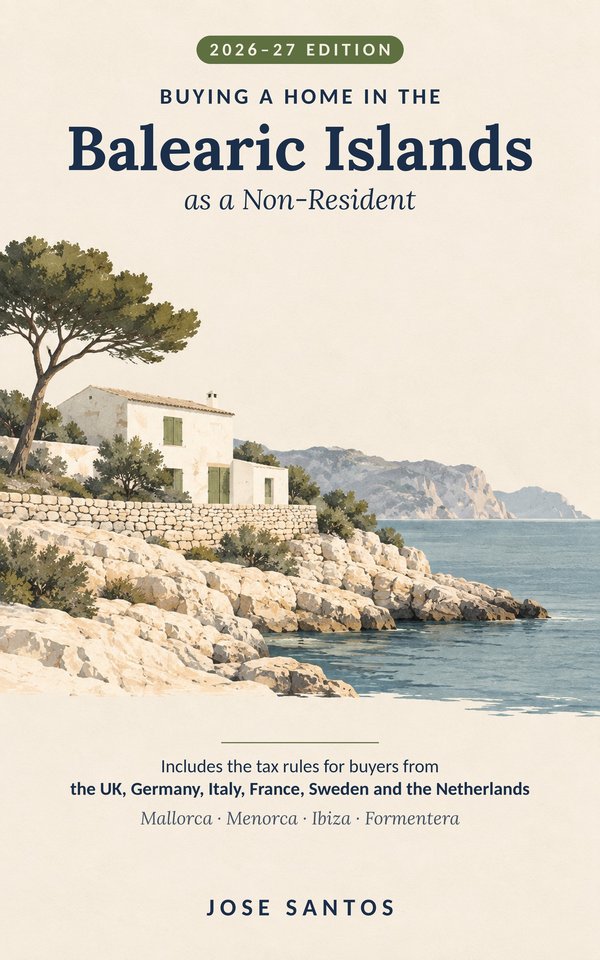
More detail in the book. Chapters 1 and 12 of Buying a Home in the Balearic Islands as a Non-Resident cover this with worked examples, deadlines and the risks behind the figures.
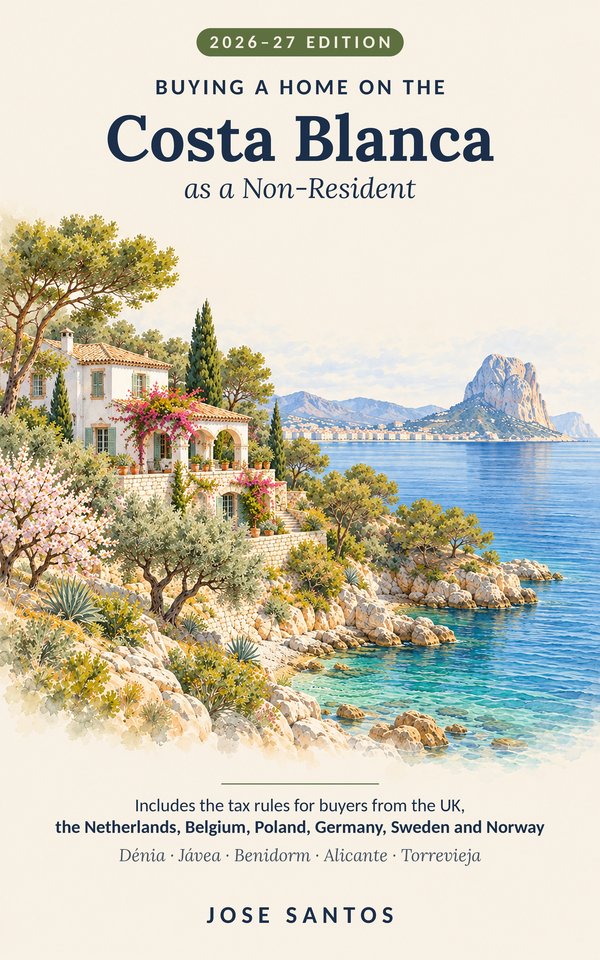
More detail in the book. Chapters 1 and 12 of Buying a Home on the Costa Blanca as a Non-Resident cover this with worked examples, deadlines and the risks behind the figures.
General information based on the rules in force in October 2026, not legal or tax advice. Rules change often: check your own case with an independent Spanish lawyer or tax adviser before you act.
Related: How much does it cost to buy a home in the Balearic Islands? · How much does it cost to buy a home on the Costa Blanca?